EDC Medical Gear
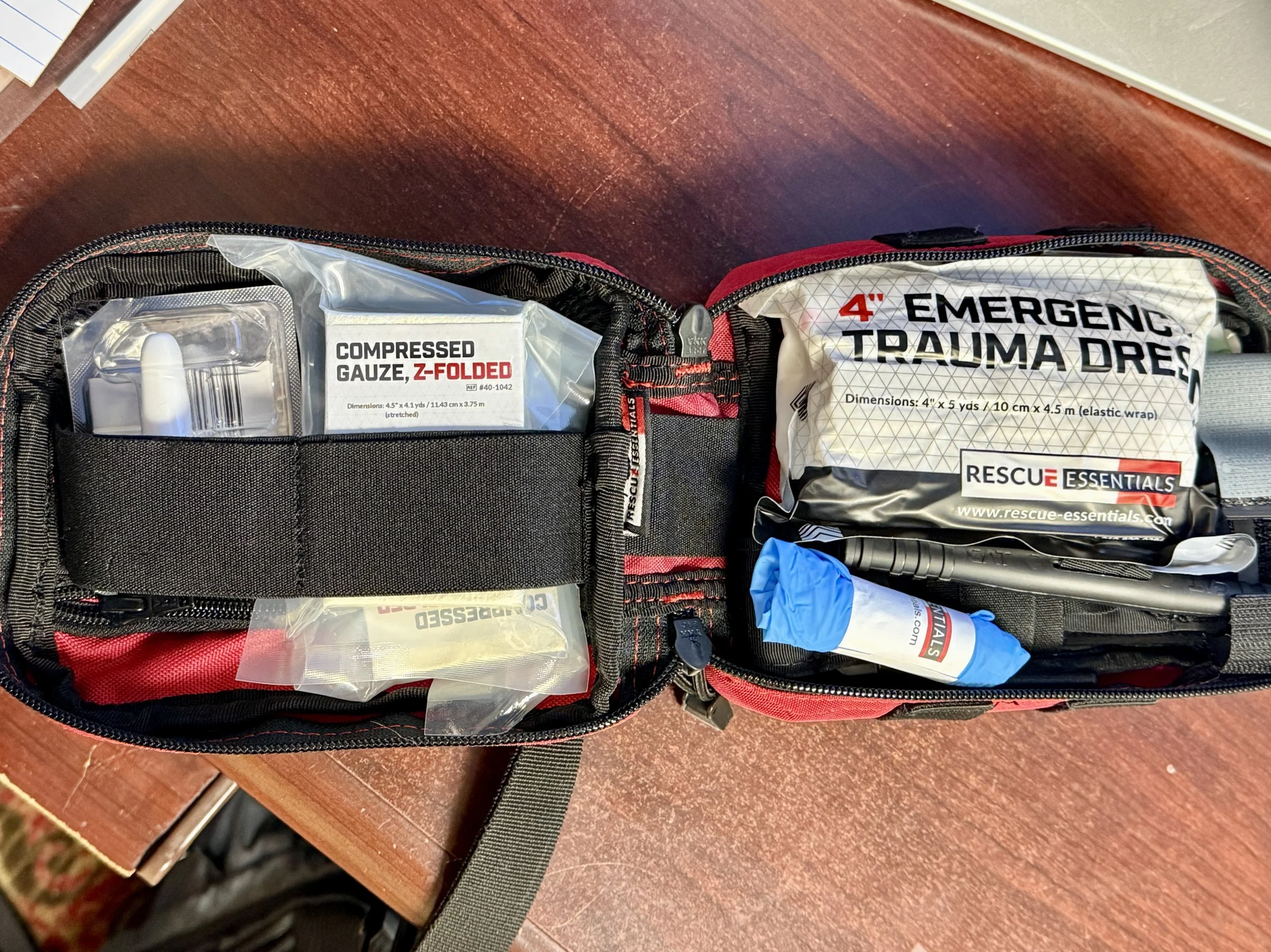
The term "EDC" stands for "everyday carry," and while it is frequently associated with the preparedness community, it applies to all of us. Keys, wallets, and cell phones are common examples of EDC items that we take with us whenever we leave the house. These items serve as stopgap solutions. EDC items might not always be the best tool for a specific task; instead, they represent a compromise in terms of size, weight, and functionality.
Over the years, I have developed an EDC medical kit that addresses trauma, blood loss, airway protection, body substance isolation (gloves), and opioid overdose. It's important to note that this kit is not a perfect solution for every emergency; rather, it serves as a temporary measure to stabilize until I can access larger kits or until Emergency Medical Services arrive.
This kit fits in my commuter backpack, the panniers on my motorcycle, or in my car's glove box. It is my constant companion.
While some items in the kit are substituted or added depending on my activities, at a minimum, the kit contains the following:
1 Israeli Bandage
2 Compressed Z-Folded Gauze
1 CAT Tourniquet (2 preferred)
1 Set of Chest Seals
1 Survival Blanket
1 Trauma Sheers
1 Pair of Gloves (I frequently carry additional pairs)
1 Sharpie Pen
1 28 French Nasopharyngeal Airway and Lubercant
1 Narcan Unit
Oral Glucose
While basic, this kit serves me very well. This kit is small enough to fall under the IFAC (Individual First Aid Kit) category; it is also robust enough to stabilize a trauma/opioid overdose patient. If I am out of the house for an extended period or going on a long motorcycle ride, I have a "Step Up" kit that I will include. The Step Up kit contains additional items, such a blood pressure cuff, stethoscope, pulse oximeter, SAM Splint, glucometer, and oral glucose.
This Step Up kit is too bulky for me to consider it as an EDC; however, the medical kit and Step Up kit all fit inside a waterproof 5-liter bag. This bag is either stored in the trunk of my car or on the crash bars of my motorcycle.
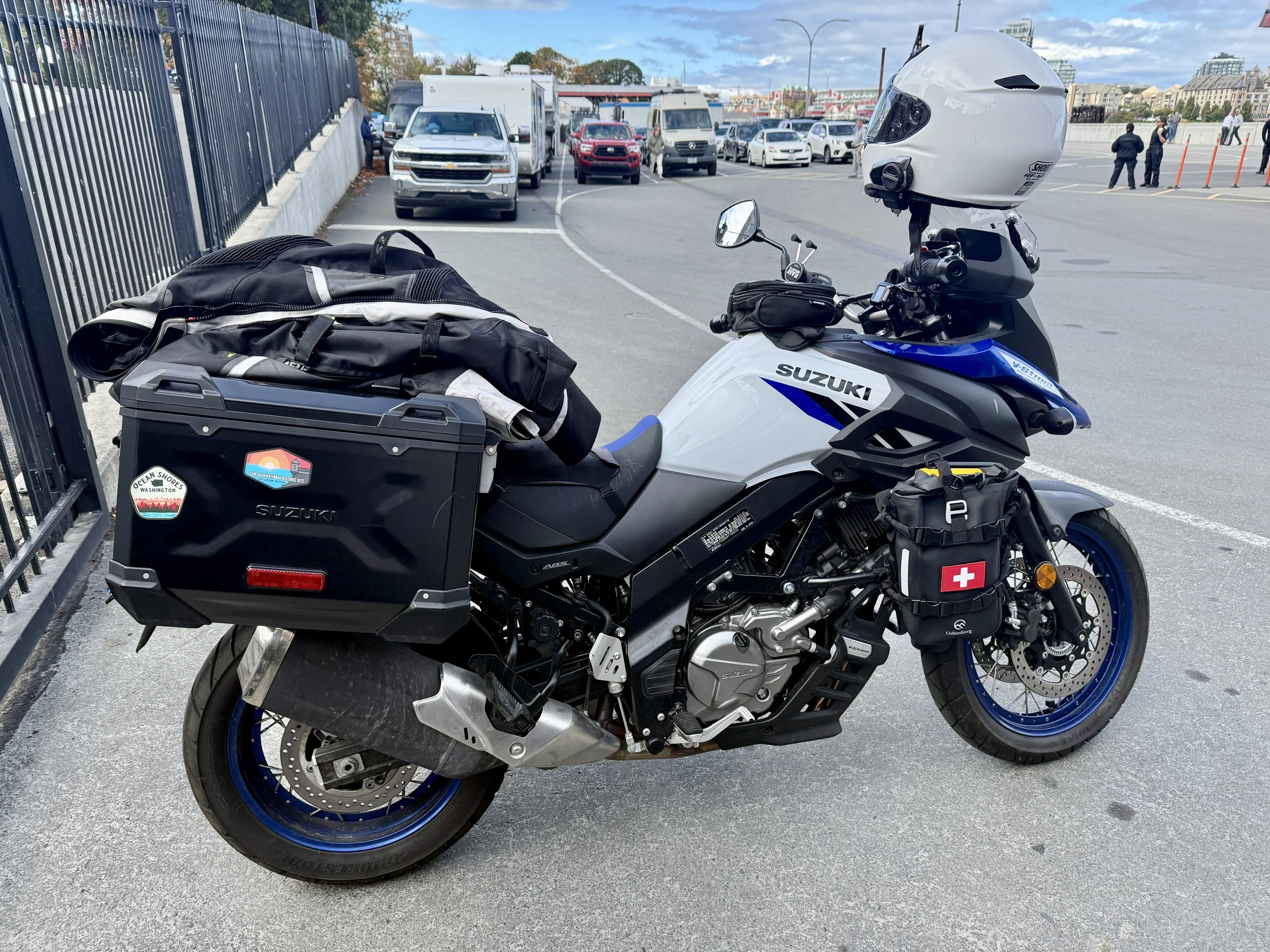
Step Up Medical Kit attached to Suzuki V-Strom
While not specifically mentioned in either kit, I keep pocket masks in all my vehicles, as well as in my backpack. I also have a face mask on my keychain to serve as a redundant backup.
No matter the quality of your EDC kit or how many items you have on your person, equipment is useless without training. If you are going to spend the time and the money to carry an EDC medical kit, you also need to spend the time and money to become trained.
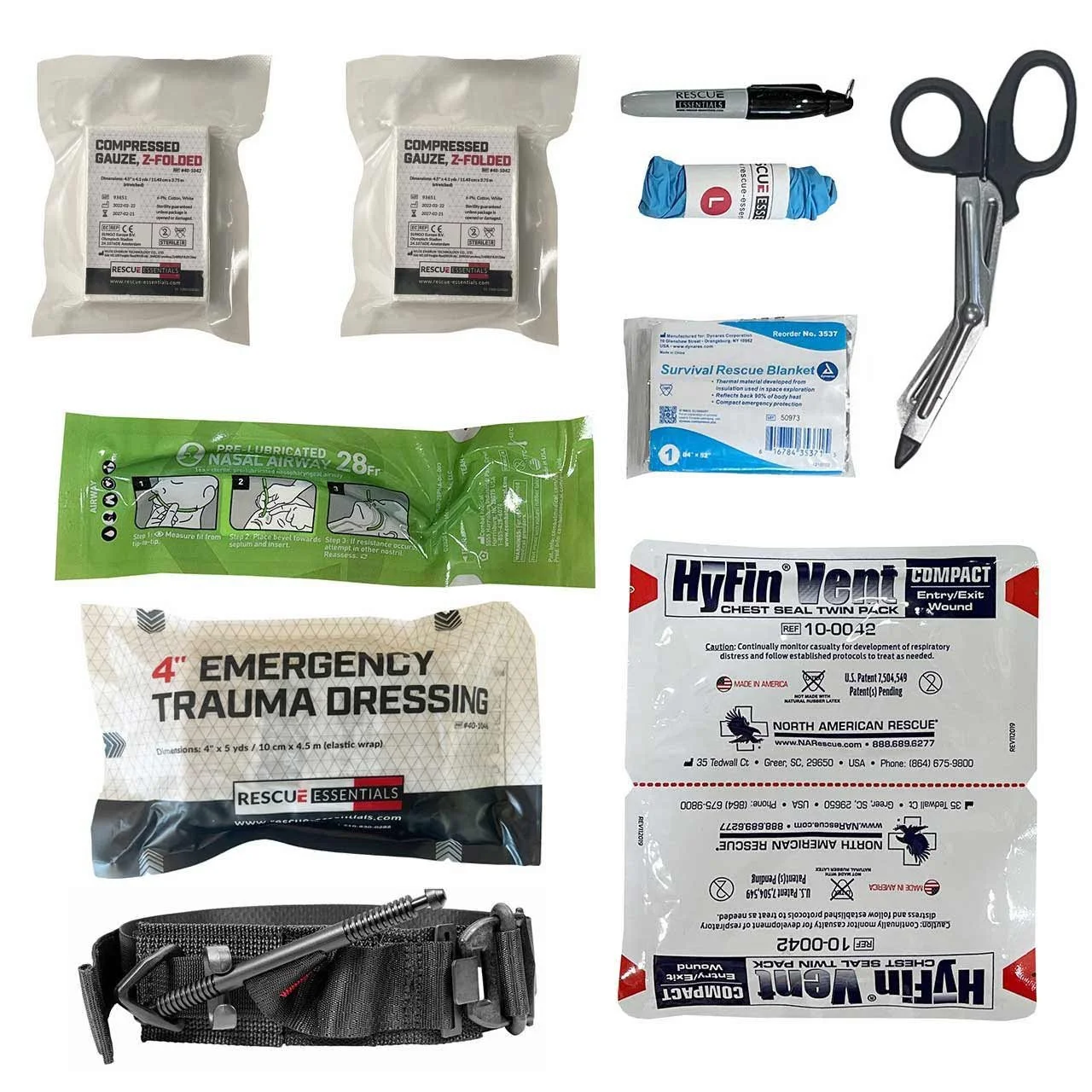
Rescue Essentials MARCH IFAK Refill Kit
For anyone looking for a premade EDC medical Kit, I recommend looking at the Rescue Essentials MARCH IFAK Refill Kit. This kit closely resembles the kit I have spent years fine-tuning and will provide you with a solid foundation. Add to the kit as you see fit, but remember to be EDC; your kit must remain small enough to be convenient to take with you.